I love that it has a feature to prove images came from the real world:
> Users can now prove the authenticity of a photo taken on iPhone 18 Pro models with Apple Reference Image, powered by the new sensor in the Main camera that can sign every pixel it sees. When a photo is taken in the new Reference mode, the camera captures signed sensor data that Private Cloud Compute develops into an unalterable reference image.5 Reference images can be viewed in the Photos app alongside the main image, like a digital negative, to visually compare the two assets and determine if any edits were made. APIs are available in iOS, iPadOS, and macOS 27 for third-party apps to enable viewing of these reference images.
It would be great if they could use the LiDAR scanner to sign a depth map of the scene in front of the camera. It would show if you photographed a flat image.
The sensor already uses phase detection autofocus. You can create a depth map out of it. iPhone X used its dual cameras and that phase data for depth maps.
How would that work? I thought the premise here is that you can fool the apple camera by taking a (very carefully aligned) picture of a still image (printed out).
A depth map from the apple camera (again, signed) would show that the entire image had the same distance from the camera.
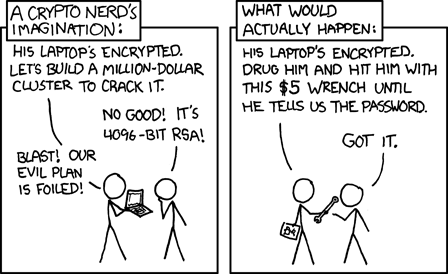
The photos are cryptographically signed in the apple image pipeline so it's not as simple as just AI generating something. That said, I can't see how this is any different to all the other times we have embedded crypto keys in consumer hardware where eventually someone finds a way to extract the key and the whole thing is busted open.
How would the server know that the request is coming from a real iPhone?
This is a pretty standard application of trusted computing and can be done entirely on the iPhone. A server would only possibly be needed for anonymization (while retaining key revocation capabilities if a key does end up leaking), but there are serverless ways to do even that (TPMs have supported these for a while now).
It wouldn't, but you could validate that a particular picture was created at a particular time, and had not changed, for example, especially with metadata that you may not want to share but that establishes certain parameters like gps coordinates. A lock, rather than an end-to-end pixel signature, which shows what was contemporaneous rather than exact provenance. If an event happened on day 0000-00-00 00:00:00am, but your photo was taken at some other time, it casts doubt.
I think a big part of validation for things like these are just "could it have been modified since Z event happened", because Z was not something people paid attention to before.
That's just a timestamping service then, not a content provenance/authentication scheme. Timestamping has been a solved problem for years; certificate authorities offer this, or you could just throw a hash onto any sufficiently trusted blockchain.
Nothing prevents anyone from opportunistically pre-generating and timestamping millions of permutations of fake kompromat and then selectively revealing the one that turns out to be useful after the fact.
You could charge per attestation, but the economics of that don't look great; you could demand publication of the image itself before attestation, but that would obviously not fly for most use cases out of privacy concerns.
I think there's a chain of trust. The sensor signs raws, and the private cloud takes signed raws, does minimal processing so they're at least coherent, and re signs that output (maybe even including the original signed raw as well in the image file).
That's a good point, You might still be able to trick the cloud to sign your photos, but that's something they could patch in updates without losing control of the key. They could have the server only sign photos taken on the latest ios version.
And honestly you could have a similar antitampering oracle that was at least obscured, in terms of "we've detected tampering but won't tell you how or why", which is frustrating but I have to imagine that 99.9%+ of images are clean.
... don't make it so shallow then. Perfectly possible in a consumer-friendly 3D printer for a face or even human body if you have lots of time for the prints.
You’re well on the way to 1:1 replicas at this point. Next you’ll need to match the thermal signature and the exact weather in the sky for the time at that location.
People have constructed video walls so high resolution they can film TV series in front of them and to an audience it's indistinguishable from a real set. It's extremely cost-effective for things like space fantasy that needs lots of exotic-looking backdrops, apparently.
It may not be in reach for you and I - but within reach of anyone with the budget to run a 'bot farm'
The high resolution video wall is quite simple. The hard part and why this has not been done earlier is that for filming, they had to synchronize the rendered background with the movement of the camera.
Movement is solved by tracking the camera's position and projecting the background from there.
Proof of captured image with hardware-based-attestation can be increased by adding extra information besides the RGB channels, like depth mapping (which a projected screen wouldn't be able to fake), and eventually light field recording (plenoptic imaging, e.g. Lytro).
also no, even in the high rez video walls its still possible to tell. maybe to an "audience" no but there are lots of fundamental flaws with video walls that make them not the same as filming it for real. all of those flaws show up in the final image and could be detected.
things like color rendering, sharpness, screen door/morie, motion blur, and yup even good ole depth queues in the lens system all show up as artifacts.
case in point, outside of a few specific niche cases like the mandalorian, that virtual production video wall thing is not actually being used all that much because of the amount of post shoot cleanup required to fix all those issues, it wasnt actually that much cheaper and its not really better either. especially when you factor in how hard it is to shoot that way.
> things like color rendering, sharpness, screen door/morie, motion blur, and yup even good ole depth queues in the lens system all show up as artifacts.
Pre-AI fake videos sidestep this sort of issue by lowering the video quality.
Add some motion blur, some camera shake, some poor lighting, the camera being slightly out of focus, and make the video 720p instead of 4k.
The credibility comes from who took the photo. The next logical and easy step is for this metadata to flow to the user agent. I'll know that it was taken by a legit journalist photographer. And id not, I can have my user agent make it fuzzy or replaced with
a kitten photo.
I think this is where we are headed. This feature seems useless on it's own since someone will eventually find a way to extract the key from the iphone and sign any image. But if they could make it so every iphone uses it's own key and the photos show "Taken by xyz" and it's linked to their icloud or identity somehow. That way images shared around will still be able to be linked to a source that you can choose to trust and the viewer can know it wasn't modified from what that person shot.
Then we might move to an age where photos which were not signed by someone will be treated as fake.
You may have forgotten that the world is driven by screenshots, and so a screenshot of a picture with the `(X) Verified by Apple to be Joe Schmoe` tacked on will be just as good as real verification for a lot of people.
What we need is almost something like the classic "press C+A+D to log in" or the idea of "above the browser pane"... something an image cannot show you unless it's legit. Perhaps a personal thumbprint icon that is different for each viewer, so you know its your device telling you that something is real and not just some mock fake thing?
I don't think we'll treat them as fake but they would probably undergo more scrutiny - perhaps in a crowd-sourced manner that provides an overall score of probable legitimacy.
> I love that it has a feature to prove images came from the real world
Congrats to Apple achieving nation-wide tracking, embedding some kind of yellow dots[1], but this time this time this is based on strong cryptography and non-removable, targeting people who don't use AI under the slogan "we are fighting AI fakes", but people still "love the feature".
On the opposite side, this read to me like there was so much image processing going on in the background and off device that they felt like they needed to prove that there was a real image backing the creation, and that it was not all AI. It really begs the question of what the extent is of image processing.
The iphone image pipeline is mostly just playing with exposure and color, things that we widely regard as fair game in editing. Where the line was crossed was magic eraser and reframe where the iphone is straight up making objects in the image.
That could be a result of a failed exposure stack. Phone sensors and lenses suck for light gathering so they have to take multiple photos and merge them together to create one that's less noisy. Occasionally you get artifacts where the merge failed.
It's still distinct from actual AI generation imo.
> Users can now prove the authenticity of a photo taken on iPhone 18 Pro models with Apple Reference Image, powered by the new sensor in the Main camera that can sign every pixel it sees.
Will this also work with third-party camera apps like ProCam?
I don’t know too much about image processing, but my intuition tells me that distinguishing a photo of a 3d scene from a photo of a photo of a 3d scene is a much easier engineering problem than distinguishing it from an AI-generated diffusion. So even just reducing the problem to the former is still a worthy accomplishment.
Agree with the weakness, but the benefit of provenance is still there. You can't tell if the picture that person took is of an AI image, but there's some value in saying "I took this" and being able to prove it.
I hope future social media presents this metadata so if someone claims a photo is from the BBC, it actually gets checked against the keys the BBC sign their photos with.
Reporters who only capture pictures on an iPhone and not a "real" camera, and who also never need to edit the photo to crop off or obscure identifying information, innocent bystanders/victims, gory violence or nudity, etc...
The problem is real, but this solution seems to not really solve it in any practical sense.
You want to do all that, then still can prove the picture is authentic. The editing history show what had been changed compare to the previous version, from the color adjustment to blur areas... it's not about preventing editing, it's about proving the authenticity when needed.
> The editing history show what had been changed compare to the previous version, from the color adjustment to blur areas...
That's not a thing. Straight from Apple:
"When a photo is taken in the new Reference mode, the camera captures signed sensor data that Private Cloud Compute develops into an unalterable reference image. Reference images can be viewed in the Photos app alongside the main image"
So this only helps prove anything if you can share the original, unedited image. You can share it alongside an edited one, but you must also be comfortable sharing the unedited original if you want to prove you own an iPhone 18 Pro. Er, I mean prove it's "authentic"
Now I think C2PA had allowances for what you're talking about, but that also ended up resulting in it being easier to break.
Reporters who only capture pictures on an iPhone and not a "real" camera, and who also never need to edit the photo to crop off or obscure identifying information, innocent bystanders/victims, gory violence or nudity, etc...
So, 90% of photojournalism outside of the major cities, then.
Canon's original high end digital models had this as a feature, that your images could be digitally signed in-camera based on raw sensor data. Primarily for law enforcement. Obviously a far broarder use case, now.
It also sounds pretty useful for anyone involved in a lawsuit to be able to present photographic evidence again. I’m sure GenAI is already a big headache for forensics, and enforcing AI watermarks will clearly not be bulletproof.
Will it ever work until a TPM like module is directly integrated into camera sensor? Older attempts of Nikon and Canon got broken, same had happened with C2PA implementation for Android - if it gets anywhere close to CPU it is insecure.
Yes, presumably there will be a cat and mouse game until the entire system including all peripherals has been brought into the trusted computing base, either physically or logically (usually with secured/authenticated communication). This has been the case for all applications of trusted computing.
Security is never a binary property, however, and can usually be better expressed in terms of how expensive it would be to subvert a given mechanism. "This image is either authentic or would have cost at least $x to fake" is already much more useful than nothing at all even without $x trending to infinity.
Nah, it’s an optional feature, so by using it you provide express consent. GDPR gives users more data ownership; GDPR does not stop you from choosing to do what you want with your data.
It’s likely DMA — Apple would be required to provide APIs for signing for 3rd party apps too.
Cynical take: A single photo to now consume up 50mb of cloud storage, adding to the demand for more data centers that supported the creation of this authenticity issue in the first place.
Finally. Android phones have been shipping with C2PA since last year, so it's great that the final holdout has capitulated, though with its own set of nonstandard tools.
Indeed, on top of Google's implementation being a bad joke, it sounds like the C2PA specifications in general are a massive fail so far. https://arxiv.org/html/2604.24890v1
On the other hand, ignoring standards altogether is the wrong way to go because the ecosystem after capture won't be there.
How will this work against rehosted images on all the platforms people actually share photos from? It’s a good feature but many popular services apply metadata stripping and basic image adjustment before resharing. That seems like the place where people would actually want to verify authenticity.
I would love to see some "pro" features hit the Pro or Pro Max. Something I've wanted for a while is the ability to have more than 2 active eSIMs; I think a dual modem would be really cool, maybe with some features targeting users in poor cell coverage/ spotty service areas.
Or feature Thunderbolt rather than normie USB-C so you can record 4/8K ProRes to an SSD, and power a multi monitor setup with your iPhone Pro. macOS would be sick. Or (waterproof) exposed PCIE lanes so 3rd parties can integrate an ecosystem of backpacks like how Pi Hats work.
The point is, with your example the link speed of the iPhone isn't the limiting thing of your example. You'll likely be limited by the speed of your storage before you saturate that link.
> I think a dual modem would be really cool, maybe with some features targeting users in poor cell coverage/ spotty service areas.
Can already do iMessage over satellite. Most “data” is download and I predict some satellite service that sends basic broadcasts (traffic, news, Text-to-speech podcasts) squeezed into a few mbps by pointing your phone at the sky (or a small cabled antenna for around the clock use). Would love to go carrier-less.
>Or feature Thunderbolt rather than normie USB-C so you can record 4/8K ProRes to an SSD,
My iphone 16 pro max can do 4K ProRes HDR or Log at 120 FPS when plugged into a SSD. If I had more builtin storage I could do it without the SSD. If you don't mind more dongling you can also have an external display along with the external SSD.
You can almost achieve this by setting a reminder to turn on "sync immediately" manually every single day (because Apple decided there should be no permanent or indefinite option, and went through the extra effort of making it timed simply for the sake of inconvenience).
I actually do this because it's the behavior I've wanted for years, and I care about it enough to go through the relentless annoyance.
I just don't understand why they wouldn't enable something p2p. We have handoff, screen mirroring, etc, but simple photo sync is impossible scientifically.
The 17 is 969 euros. The 18 Pro is 1479 euros. How can I justify the difference? I'm on 13 now and I wanted to get an 18 but since there is no such thing I will probably end up with the 17.
I am actually quite excited on this iPhone 18 Pro. Seems to pack a a lot of exciting stuff. 2nm A20 Pro, C2. I wish they have N2 but I guess not. 2nd Generation Vapour Chamber. I thought I would have to wait another generation because Apple like to use new product features for two generation before moving on. And it seems this Vapour Chamber along with other heat desperation features are much better built. Much better Camera. And larger battery. With 60W charging that finally matches or closes to a lot of Android phone has been doing.
Never thought they would do it all within one update. In terms of hardware that is pretty much everything I wanted other than Silicon Battery.
I mean, isn’t that how like 90% of new SwiftUI apps are created these days? Just telling an AI what you want? Apple already can’t keep up with the review.
Besides a better camera what all this along with the past generations have so exciting ? I just fail to see a reason to upgrade. Maybe I am getting old?
Because of a very, very last minute AppleCare replacement (like, 35 months after purchase), I have a year-old iPhone 14 Pro.
I figured there was nothing Apple could introduce yesterday that would turn my head, but the 40+ hour battery life AND the adjustable aperture on the camera are, by themselves, making me consider it. It'll all come down to what discounts or carrier subsidies are available to me, and what the trade-in value is for my phone. But as a shutterbug who travels, those two things are VERY interesting.
It could be as simple as Apple committed to a certain volume with Qualcomm before they were certain they could get mmWave working so they have to keep using Qualcomm modems somewhere while they burn down the commitment.
Personally iSO 26 is so unbelievably glitchy, it's only not embarrasing because you know others spent $$$ on the same thing so everyone pretends it's fine.
They seem to have ironed most of the problems now. You can disable liquid glass if you hate it, and as a result iOS 26 is nearly as good as the previous version. I’m running it on my iphone12. I hated it when it first came out. But it seems fine now.
I don't know how you're using it. The most broken (so it needs to be restarted sometimes) is Podcasts, but Music, Safari, Settings etc have glaring visual glitches too.
Well, it might help that on day 1, I turned off the liquid glass effects in accessibility settings. At first there were several small layout / UI bugs that came from turning liquid glass off. But it seems fine now.
I don't use the apple podcasts or music apps. (Overcast and Spotify for me). I haven't run into any serious problems.
I'm not sure if you're an iphone user or did you root your iphone?
It's NOT possible to turn LG off in iOS 26. It is possible to reduce transparency and motion (i tried with and without enabling those and it's broken anyway).
I have Reduced Transparency, Reduce Motion, and Prefer Cross-Fade Transitions, all enabled. You have to have Liquid Glass set to Clear for Reduce Transparency.
I do use the Apple Podcasts app, but YouTube Music and DI.FM Radio apps for music.
I never see any rendering issues / glitches, and the UI is smooth & snappy.
0. none of the options you describe really disable LG and the glitches it introduced.
1. you don't need to switch LG to clear to reduce transparency. you can use reduce transparency with any LG theme. you just need to reenable "reduce transparency" after changing the theme. why? ask Tim.
2. in Podcasts you can tap between Home and Library to see the selection jank around the middle New tab. happens every time.
and if you tap to change episode sorting oldest to newest, then change it back, it 100% of the time won't ever change back again, unless you exit and enter the show again.
and semi daily when switching to it from lock screen the now playing layout will be garbled, either just the bottom card or the entire now playing screen is empty (at which point i usually restart the app).
and of course janky layout shifts and adjustments when switching between screens like search, show, episode, transcript, etc (which additionally also all involve sliding motion despite reduce motion + prefer fade on, but i will let that slide)
What do you do with your phone that requires you to know the memory details? Genuine question, I have absolutely no idea how much memory my iPad or phone have and don’t see why I would need to know
With the price of ram going up by 5x, I want to see our industry move in the opposite direction. Computers for regular people should go back to 4gb or even 2gb of ram, just to keep the prices sane. We should get software working well on those devices, just like it did a decade or two ago.
Small, memory efficient programs run better everywhere. It feels like theft to make consumers pay for our inefficient software. Electron / react on the desktop is such a rort.
>With the price of ram going up by 5x, I want to see our industry move in the opposite direction. Computers for regular people should go back to 4gb or even 2gb of ram, just to keep the prices sane.
Sure. Right along with Intel Core 2 Duo and Windows Vista.
Yes and no. If I recall, 32 bit windows has a fixed allocation of 3gb for userland and 1gb for the kernel’s memory space. I think 32bit only really works well for memory sizes smaller than 4gb. It might not be worth it, given a lot of OSes are in the process of deprecating 32bit support.
I'm waiting for a software release for my iPhone 16 Pro Max that will let me plug in a dock that has an attached SSD, keyboard, mouse, and display, and an option to pop up on my phone to reboot into MacOS.
Also, if they make a neo 2 from the A19 with 12 GB that'd be cool.
You’ll be waiting awhile. iPads have had desktop M-series CPUs for ages now, and you still can’t run macOS on an iPad.
It’s just a software restriction. I’m sure they have macOS running on iPhones and iPads internally, probably both through a VM and natively. But it’s very Apple to block this use case.
The amount of RAM doesn’t tell you anything about "the best value". Bad software with a large amount of RAM provides less value than highly-optimized one with a lower amount of RAM, for example.
This was the whole advantage of the iPhone at the beginning: not a lot of RAM (meaning less energy needed) but a highly-optimized OS that works well even with that constrained environment.
Because I am buying a phone to use for the next 3 years and want to buy it based on the most important property of compute devices right now. I couldn't care less about the camera and the 13 random metrics that all look the same as every other camera announcement. I will happily take 96GB of RAM in my phone (and I know what that means) and would gladly allow you to make it 1.2mm thicker in the process.
You want a 96GB RAM phone and only plan to keep it 3 years? I cannot fathom the way some of you live. I have an iPhone SE from 2022 that I don’t expect to get rid of before at least 2-3 more years, meaning it would have been in use for 6-7y at minimum. And it’s perfectly comfortable to use, I’m not forcing myself in any way to keep it longer. And you’re talking about wanting a ridiculously expensive phone and only have it for 3 years? That sounds so wasteful and unnecessary
I couldn’t agree more. I’m typing this on an iPhone 12, bought new 6 years ago. My phone still feels snappy. And it gets me through a whole day with 60%+ battery remaining. The only real complaint I have is that I only have the 64gb model. I need to delete things every time a software update comes out because of how bloated modern software has become. But the hardware is fantastic.
I have no idea how much ram my phone has. So long as apps run well, why would I care?
It's about multitasking. RAM is the upgrade trigger for me. I'm so exhausted by developer introduced bloat in software such that almost every app fully reloads when switching. Devs ruin multitasking every few years until another RAM upgrade.
You're missing the important bit in the GP comment:
> the most important property of compute devices right now
Memory didn't matter when iPhone 12 was released, but these days it determines which local LLMs you can run on device. That's the point of that comment.
People sued apple for selling a device with no mention of ram and then apple released the next gen saying "this has more ram, you need to upgrade to it to use the features we advertised for last gen."
How about avoiding that scenario again? Is that a good enough reason? Being a diligent, informed consumer?
I’m being hyperbolic. Sharing the amount of RAM seems table stakes with the current demand and failing to disclose it seems like the answer wouldn’t be positive.
What on earth would you do with an iOS device that has 96GB of RAM? You realize the last generation (i.e, the most powerful consumer phone in the world today) had 12 GB of RAM? You feel the need for eight times that amount?
Number go up, I guess? A lot of people derive great satisfaction from ever larger (or sometimes smaller) number. But, uh, 8X is probably too much, need to spread that out over a few generations.
Very obviously you get a Mac Studio for that, not a phone. (Oh, the 96GB Studio is almost $6000, you counter? Imagine how much it would cost in a phone form factor).
You can't possibly expect Apple to take that market segment seriously.
Based on supply chain leaks, it's pretty safe to assume 12 GB memory with up to 100GB/sec memory bandwidth at best.
The A19 Pro had 12 GB and was around 77GB/sec memory bandwidth for reference. If I was a betting man, I'd say the memory bandwidth on the A20 Pro is the same.
The non-max 18 Pro getting 17 Pro Max battery is quite a great leap, no? This is actually the most surprising announcement today, given how Duo was anticipated.
Apple basically need to release a new model every year to fit the phone upgrade cycle so I suppose it’s not that surprising to see one with so few compelling features. Maybe next year.
I mean, I can't remember the last time they DIDN'T say that. Variable aperture is kinda cool I guess. 256Gigs of storage basically means everyone's going to have to upgrade their iCloud storage monthly spend just to back this thing up. I've stopped sending my camera roll to iCloud just to save on space.
Apple events are full of these meaningless statements, which always drive me crazy. Of course it's the "best iPhone Apple has ever made." If it wasn't, then wouldn't I be better off buying an older model?
> Oh I back them up to Immich self-hosted. I just stopped paying Apple.
Which means this original comment is somewhat disingenuous: "256Gigs of storage basically means everyone's going to have to upgrade their iCloud storage monthly spend just to back this thing up."
Clearly there is another option (as evidenced by your own behavior). But let's not pretend that option is free, either.
Agreed. The photo backup is so seamless. I’ve been documenting my electronics and other possessions for insurance purposes and in anticipation of a move. It’s been so easy to go around the house taking photos of serial numbers and such with the better camera on my phone. Then I grab my iPad and update the spreadsheet. Nothing needed to happen on my end, the photos are just there for my iPad to access and as later proof if I ever need it.
>I've stopped sending my camera roll to iCloud just to save on space.
how do you backup your photos when the phone gets full. I dont have a mac and the process is excruciating. Also the formats get messed up so some photos become unusable. I stopped taking 'live' photos because of this.
Not the parent, but Google Photos has been decent as a secondary backup. They even backup Live Photos now.
The two formats I've found that they don't back up accurately are rotated photos (if one's a stickler for "originals") and cropped screenshots (JPEG instead of PNG). Possibly the sidecar files for edits too.
There’s this MacOS native application called Image Capture, use it to backup 100GB of photos. I then partitioned the photo by year and 7zipped them with encryption.
This is not even close to true. I took a bunch of photos side by side with the iphone 13 pro and the 17 pro. The 17 pro was unmistakably much better, particularly on the telephoto, it wasn't even close. There was a very clear improvement in detail and sharpness, and not in a crunchy post processing way, the sensor is simply larger and higher resolution.
Now I think all the iphone cameras still suck compared to an actual camera, but the improvement over the last 10 years has been dramatic.
You say that, but I've bought the non-pro iphones the last few generations (13, 15 currently) and consistently wanted a better camera, so this upgrade cycle I'll probably shell out for the 18 pro.
Still on a 12 Pro Max, which I bought near the original launch. It is in need of its first replacement battery. I’m very curious to see how much snappier it feels with this next iOS release which is focused a bunch on performance; in addition to a new battery, since I believe my iOS is throttling performance given the health.
Still using my 12 Pro Max as well. Battery is still okay-ish on mine. Not good, but I don't have to actively worry about it. Will be looking forward to all the fancy new features when I replace it in 3-4 years
I still use a 13 Pro Max for travel. Incredible longevity. The only downside is it requires a battery pack to last a full day but those are slim and compact now. I intend to replace the battery soon since it still has 2-3 years left as a backup.
It will probably keep most of its value too, if hardware price inflation continues.
Yeah I tend to squeeze the life out of my Apple purchases. iPhone 4s -> 7 -> 12 Pro Max. And still on a 2017 MBP at home, running Sequoia via Open Core Patcher.
I'm finding it really hard to justify buying a new iPhone. They're so expensive these days for marginal improvements that seems if you're not an avid photo taker/media maker you don't get much back from.
It makes a lot more sense to purchase one if you consider their residual value when you sell it to upgrade later. A typical Android phone depreciates much more quickly than an iPhone. My three-year-old iPhone 15 Pro is still worth $500 or more on the open market--about half of what I spent. That's only $166/year.
The downside is that you need more money up front to purchase it.
TBH I don't think I've ever bought a new phone because there was something new and fancy that I could justify. Every phone I've bought has been because my previous phone stopped receiving software updates, or in the case of my Pixel 6a, had a hooped battery.
Then don't. Isn't the whole point of long support cycles that you can keep using your phone for 5 years +, if it serves you well? (typing this from an S22)
Sadly my 14 pro has a crack in the lower right screen, and the tele lense has some issue with fixing lens position / focus (? I hear some clickering and it doesn’t focus). Otherwise I would just stay another few years with it, now I’m going to upgrade - and yeah I’ll stay with Apple. I have some devices quite a few years old by them and still working flawlessly.
> eSIM-only models deliver up to 36 hours of video playback on iPhone 18 Pro and up to 45 hours of video playback on iPhone 18 Pro Max.
That might convince me to upgrade. Not because I care about watching video for two days straight, but hopefully it means the battery is large enough that it'll last 5+ years before battery degradation becomes annoying.
I doubt any phone battery is lasting 5+ years. But I can say modern iPhones are pretty easy to swap the battery on. They designed it so the back plate gets removed to open the phone rather than the screen. No more risk of cracking the display.
That is genuinely shocking to hear. You have to be like 3+ sd above the mean. Do you know how many charge cycles you have? I recall that most batteries need replacing after 300-500 cycles.
I follow the estimate that lipos lose 2-4% capacity per year without any use beyond recharging for safety. If the battery sees daily use that number gets a lot worse.
My guess is everyone else is the perfect mix of hardly any use and winning the battery lottery.
I hear you, but the convenience of 30W charging is very hard to give up. The only downside is it damages the battery, which makes it harder to give up, which damages the battery more.
My 13pro is at 84% capacity, but in the last month or two it seems to lose charge much more rapidly than it used to. Probably the only reason I'll consider an upgrade.
The maximum capacity of my iPhone 17 pro is still at 100% after 192 charges, that's after 1 year of usage. The extra battery life does reduce the amount of charges I have to do so that helps with the battery life.
I'm not sure where the capacity will end up after 5 years, but I think my iPhone 14 pro was at less than 95% at this point. Apple refused to replace just the battery on that one because of a small crack in the screen.
I took an iPhone SE generation three to Apple Store to replace battery and they broke the NFC functionality in a way that passed their simple diagnostic tool but failed to work in the real world. I had to go back and reset the phone and upgrade my IOS so they could troubleshoot it (the phone menu for setting appointments does not allow you to pick repair broke NFC funny enough) and they were nice enough to give me a new iPhone SE to replace we proved it was broken. But that was kind of worrisome and put me off any kind of Apple self repair for something they still make.
With reason. That glue is a nightmare to deal with. I would not advise anyone start with iPhone repair.
I damaged my first iPhone repair even after multiple years of active hardware modification on other consumer devices. The older models really only go smooth if you have the Apple tools. A nice $149 of tool rental to swap the $50 part at home, rather than paying the $199 to get Apple to swap it for you. Odd how that math works out.
I'm on the iPhone 13 pro max since launch and my phone comfortable gets through an entire day of usage. (Given my usage is pretty light). If the battery fubars in one of the next years I wouldn't be upset, 5+ years of battery life is enough.
But I also don't see it failing me any time soon on battery. I think local AI models in a future iPhone could be an actual reason to upgrade.
I have a 12 Pro Max purchased at release, battery is now at 83% capacity. Still lasts all day and then some, rarely think how much I've got left on a charge.
Meh I just replaced a battery in my 14 pro (and the charging port) for ~200 EUR. I didn't want to upgrade yet and I would not even be considering upgrading if the device had USB-C
Don't. Large iPhones are the deadweight of a ball and chain, and fits in no pockets. Next one will be the SE, and even if I buy an external battery, it's still lighter than the ingot Pro Max. Also you can buy one every 1.5 years.
I’ve never been more baffled by an Apple event in my life.... We in Norway are part of the first batch of the rollout for the new AI/language feature?!??!?! Something’s fishy. Somethings up!
I really don't care at all about phone models, I just want software to launch quickly.
Waiting 15 seconds for a simple app is just infuriating in this day and age. This is mostly on crappy app developers, but a lot of that falls on Apple for not having a rating system that encourages basic good app behavior.
Every bad app that I encounter, which sends advertising notifications, takes a long time to launch, etc. is dominated by 5 star reviews, somehow. The whole ecosystem feels broken.
(And I'm also really offended by how ugly, unpolished, and broken the Tahoe visual style is on iPhone. The whole thing feels like a buggy beta, something completely unworthy of Apple of the past. That it's still not fixed is an indication of the Apple of the future, unfortunately...)
I try and pick apps based on package size the rare time I look for some app. There are still apps out there made like they were 10 years ago (that probably haven't been updated in 10 years) where the package size is sub 10mb, sometimes sub 1mb. You get an app like that it is performant and will fly on any iphone really, and barely impact battery life in all likelihood.
Package size has very low correlation to launch time. The binary and assets are separate. Additionally some slow app launches are simply waiting for a network request or chain before the view controller renders.
Situational. But often these apps are doing something just using that standard ios ux library from the really old days, and they open almost instantly as a result as it was designed to work on an iphone 3gs.
No I need better phone app developers. The fastest phone has the same issues. New phones are just as sluggish. And, it's a phone, there's not going to be fast networks everywhere, and a whole generation of poor developers was raised to believe that the network was always present and always fast.
And on the iOS side, Tahoe inserts all sorts of overdone, ridiculous animations that slow down phone interaction, but delaying presentation of
We are up to the iphone 18 now. The iphone is said to be about 50% of Apple's revenue since 2012. Regardless of app developer quality, it is quite literally Apple's now-well-honed job to ensure that enough people want to buy next year's model, by various types of forced obsolescence. Indirectly, this means that the durably snappy and non-sluggish experience you're forever wanting can never actually happen. 'Forever wanting it' is an essential part of the business design here!
In this system. Of 'smartphones', where a small handful of corporate masters - who also happen to (now!) be a big share of the world's largest and most profitable corporations - now own over half of the computing world that we love, following their whirlwind 20-year takeover of it.
"No I need better phone app developers." - Hmmm. Commiserations. The trend of developer quality (and/or it's inverse - e.g. system complexity and overheads) has been fairly constant since the term 'developer' became mainstream parlance, and you won't need me to point out what effect AI coding agents have had upon the doorway-to-entry.
Indeed, on modern laptops and phones every UI interaction should be instant (check out BeOS in 1995 for comparison). For background stuff, add some progress indicator.
Can't believe the crap OSes and frameworks add these days in terms of performance cost (and sadly, Apple doesn't exactly shine in that regard)
The bigger question is what are these apps doing that they aren't doing 10 years ago that they now need all this extra compute for to serve the same basic functionality? It always amazes me how stuff like instagram just tanks my battery life. It is instagram its basically wgetting image urls same as its always done but it is taking over system resources for reasons...
I just tested a number of apps on my 15pm connected to WiFi and could not find anything that took longer than 5 seconds. That includes some small developers and bad developers.
Not quite sure where you are seeing this. Maybe games?
I have no idea which iPhone version I have anymore. It doesn't feel as though it's missing anything, though.But I'd upgrade immediately if the new models truly offered better AI experience.
Forgive my skepticism that Apple will get it right. Even the lauded latest version of Siri is far worse than the labs' offerings or Android at voice dictation (I now have to fix 1 word per sentence instead of 4, previously)
Agreed on iPhone versions not feeling significant. I personally consider it a good thing. I'll keep my phone for as long as possible and not feel the need to upgrade.
I personally don't care if Siri is the worst LLM of the big players, as long as it can answer my basic questions and search my texts, I'm happy. I don't need "frontier intelligence" for that kind of stuff.
As for dictation, they say the new dictation is much better, requiring an iPhone 17. Unfortunately, I won't get to find out if that's true for another five or so years, but I'm hopeful for a better dictation on device, because you're right.
I update my phone now when the battery requires two full charges to 100% to last throughout the day. But there's no feature I'm looking for. My current phone is a 13 -- so I guess it lasted five years, which seems crazy long for it to be perfectly fine from a functionality perspective.
I would probably still have my iPhone 12 mini if not for what happened to its battery. Loved that form factor, but the battery went from bad to worse in just a couple of years.
Hopefully these models have a longer lifespan before the battery life forces a replacement. If they truly offer 36 hours, there's more runway before they hit the < 18 hours point at which many people need a refresh
I’ve been holding on to my 12 mini for a bit too long probably. I loved the thing before iOS 26, but sadly since then, even basic tasks cause it to overheat and just hang for several minutes until it cools off. The battery is a joke of course, but I was fine with that until the overheating. I’ve swapped it 2x over the years for a new unit, but shit software, shift web, and shit cell data coverage have made it nearly unusable.
I’ll finally, albeit reluctantly, upgrade this year. I really liked the mini form factor.
Almost the same as what I did, 11->16 Pro, and really only because I wanted a nicer camera. 128Gb has been more than enough for what I need. Don't have a reason to upgrade, battery still gets me through 2 days without a charge, and with Kino the times I want to have nicer-than-stock video I can get it.
I'm on a 12. Paid really not very much to get the battery replaced recently, and I wished I'd done it sooner. There's at least another year left in this phone now if I want it.
That's kind of like saying the 2026 Corolla isn't really much different than the 2025. People don't expect to upgrade annually. I'm using an iPhone 15, and upgraded to that from a 6S+. The 15 was a night and day difference. Most people are financing their device with their service plan which is 2-3 contract.
The 13 is the last generation of the mini and I still have mine. Good to know I'm not missing anything. Battery capacity isn't even below 80% so I can't replace it under Applecare yet.
This is the problem for Apple. Expect shorter lifetime for security updates in the next few years. It’s why they’re pushing the “lease to own”, because people aren’t upgrading every year, or two, or even three any more.
Indeed been using the new Siri since June and it fails a ton in comparison to chatGPT voice!
Using chatGPT voice i can see Open AI's push for pushing us to a new Internet voice paradigm 1st with screens/visuals secondary & complimentary to possibly none at all. It would be much safer especially when driving to get super intelligent human like directions where voice says drive to the mcdonalds on dorset you go to all the time and across the street is the new 7 Brew coffee shop.
Maybe if we mock the iPhone enough, they'll stop autocorrecting words with other words that are on the opposite side of the keyboard. Or mistype letters with the letters just next to them.
iPhone is laughing stock. A neverending comedy of "There is no track named 'Call Mom' in your Apple Music library."
The photos I get on my iPhone are worse with every generation. Can anyone tell me if the photos are any good on these new ones? The hardware is fine I'm sure it's the post processing that destroys the image.
The 16 was a significant downgrade in quality due to over-processing. The hardware is actually improving, you just unfortunately need to use a third-party app to get access to the raw photos.
I haven’t upgraded since 2020 and I still don’t have a good reason to. My iPhone 12 still runs great. I use a real camera for photography. Other than the cameras, what has meaningfully improved over the last 6 years?
I'm still on an iPhone 11 that I bought second-hand a few years ago when the iPhone 15 was the newest. The battery life isn't great which is the only thing tempting me to upgrade, but I'll still put that off as long as possible.
Other than the battery I have no complaints. It's a phone. I can make calls, send texts, browse the web, check maps, take photos. What more do I need? Why waste money?
I can't even tell the difference between newer iPhone models. Why do people upgrade every year? What's the point?
Yea I just swapped my jogging/beach iPhone from an Xr to an iPhone 12 and wow, it's so much better than the Xr and pretty much as good as my "proper" phone, an 17Pro. It's got 4G RAM instead of 12G but it performs almost as well. Xr->12 is a huge leap in performance and I noticed it straight away. But the 12 against the 17 is much harder to see the difference. Less redraw of icons on the main screen is the primary thing I've noticed.
It's their in-house cellular modem for 2G/3G/4G/5G.
No details on satellite comms, but the predecessor C1X also handles satellite communication and competitor Qualcomm also does satellite comms on the same silicon, so I'd say yes.
I wonder how this works in tandem with the Computational Image Pipeline?
From Apple: "Apple Reference Image provides users with an unalterable reference photo, visually confirming what the sensor saw at the moment of capture."
The pixels that arrive in the final image have already been significantly altered from what the sensor saw: demosaicing, noise reduction, Deep Fusion, artificial bokeh, etc. Is the signature anchored to raw sensor readout (making the reference a de-mosaiced digital negative, with all CIP processing deliberately left outside the trust boundary), or to the CIP's emitted image (in which case what does 'unalterable' actually protect against)? If it is the latter, then Apple are essentially saying some forms of computational (and ML) manipulation are acceptable in a signed capture, so long as it is their manipulation.
Looking forward to the photo samples with the variable aperture. If it's something you can manually set (with the Camera app or third party), that would be neat. The miniaturization of this mechanical piece is really quite wild.
While it is a cool technical advance to see, its use case is probably niche. One of the biggest things people say about photography is lighting. In general, if you can get more photons onto your imaging plane, you will have a better picture. This is why phone cameras, despite advertising 100s of MPs, still fall short. For the same field of view and capture conditions, fewer photons are collected because phone sensor sizes are much smaller. This is a physical limitation that cannot be overcome.
Now given that they already have a lower photon budget, you now want to add aperture control, which when stopped down physically reduces the amount of light from the scene that reaches the sensor. Thus you need to compensate for these lost photons somehow, so gain will probably have to increase quite a bit, but then you get noisier, grainier photos. This then leads to the suspicion that you will need some sort of AI denoising or computational processing to recover some of that lost image quality. Though of course you can comp in other way such as exposure time (they can make big wins here with their stabilization) and tons of lighting.
Also a phone already starts with very deep depth of field because again smaller sensor size thus smaller focal length etc. Most images at their lower f stop is already in focus. So the ability to reduce aperture or simulate shallow DOF is trying to give users more of the creative control that larger sensor cameras naturally have (need to manipulate because of their larger sensor size) and doesn't make much sense to me.
>Also a phone already starts with very deep depth of field because again smaller sensor size thus smaller focal length etc. Most images at their lower f stop is already in focus. So the ability to reduce aperture or simulate shallow DOF is trying to give users more of the creative control that larger sensor cameras naturally have (need to manipulate because of their larger sensor size) and doesn't make much sense to me.
Totally agreed. I wonder if it will make 180-degree shutter angle video easier to achieve. The only way to achieve this on current iPhones during the day is using a pretty strong ND filter.
The iPhone 18 Pro main camera is f/1.48, which is half a stop wider than the f/1.78 main camera on the 17 Pro. An f/1.48 fixed aperture would probably not be ideal (less depth of field, more revealing of lens aberrations) so there is a real light gathering advantage to the variable aperture.
>Also a phone already starts with very deep depth of field
Fairly deep. You can easily see background blur on a modern iPhone camera if you focus on something close. The very fact that the cameras all have variable focus shows that depth of field isn't as deep as all that. The extra depth of field from a narrower aperture could certainly be useful in some cases, such as landscapes. Here's a question for your favorite LLM:
"If I am shooting an iPhone 17 Pro main camera, what aperture would I theoretically need to get perfect focus from 1.5 meters to infinity, assuming a CoC suitable for a 12MP shot?"
Answer: about f3.2 if you manage to focus at the optimum hyperfocal distance.
>which when stopped down physically reduces the amount of light from the scene that reaches the sensor
As you say, this is only the case if you can't increase the exposure time to compensate. In daylight you will often have plenty of latitude to do so, even without image stabilization. Typical daylight shutter speeds at f/1.78 can be around 1/1000 at base ISO, so there is plenty of room to increase exposure time by 2-3 stops in those conditions.
Is anyone else intrigued by the $129 "panel of over 50 biomarkers, aimed at enhancing preventive health insights?" This was mentioned in the Apple Health segment. [0] I checked out Quest's website and there wasn't an obvious match. [1]
Yes, that felt very bizarre and glossed over. The specific details the speaker gave made me feel like it was a weird product placement, but like, _why_? Why would this multi-trillion-dollar behemoth needs to strike a brand deal with Quest?
My wife just preordered an 18 pro. She’s the family photographer and is still on a 128gb iPhone 12, so it’s time for an upgrade and she fell in love with the cherry color.
She bought the 12 instead of the more appropriate 12 pro years ago because she loved the purple that she couldn’t get with a 12 pro.
It's also because, until Apple's C-series models, they would've had to use Qualcomm modems which had a percentage-based royalty, and Apple would likely need a new contract for usage in Macs, so may had to pay even more. Even with their own modems they still have to pay Qualcomm's patent royalties, so it's likely just don't want to do that on devices which can cost over $10k today.
Ok so another “better” smartphone. To me it is very hard to get excited about the new smartphones. It really seems they have nothing new. I mean you have Apple Pay on any old iPhone and the software is more or less the same, the battery more or less the same…there is really nothing new. I am going to get a 12k or 16k camera to solve the “camera” issue and that would be it to avoid buying better iPhones every x years.
45 hours of video playback is insane?! Is this accurate, because if it is I will sell my phone and buy this. Normally my samsung discharges in about 12 hours or less when I'm out, not even watching 12 hours of video.
"On iPhone 18 Pro Max, five minutes of wired charging provides around seven hours of video playback"
Materially impactful feature holy moses! I can plug it in, brush my teeth and I'm set for the work day.
iOS video playback is pretty highly optimised and hardware-assisted, though, right?
Not sure you can really extrapolate non-video battery life from video battery life. I have an ageing iPad and I can get a couple of hours of video when the battery is at 30%, but it would be gone in 45 minutes if I was browsing.
Depends on which video codec. If it’s the most efficient one that has dedicated silicone embedded in the chip, it’s going to work great.
Web browsing is typically significantly harder on power. Plus these benchmarks usually mean in a perfectly dark room with the backlight at close to zero.
I don't know why we even have this event anymore. There's a new iPhone every September. It's incrementally better than the last iPhone. Phones keep getting more expensive while doing basically the same thing for some reason. Just buy whatever is out when you need a new phone.
I bought an iPhone 11 in 2019 I think? It last until 2 years ago when I limped along until the iPhone 16 Plus. I like the big screen area. The premium for Pro isn't worth it to me. I hope to get another 3 years out of it.
What I would like is an iPhone with Touch ID as an option and no, I don't mean the small one (SE?). I want a big screen. Put the Touch ID on the back of the phone like the samsung Galaxy did.
I literally hate Face ID with a passion and it's a massive accessibility issue for people with visual impairments.
No amount of slightly better CPU and camera is going to get me to upgrade every year anymore.
If you have to hold your phone closer to your face because of poor eyesight, Face ID will constantly fail. So you have this dance of having to pull it away to get Face ID to pass when required. Touch ID just works.
we’ll be waiting a while. The last Mini was iPhone 8 sized, when I considered anything larger than the 5 to be too much.
The Mini thus, undersold, because if you were fine with the 8 then iPhones of that size were still available (2nd Gen SE). Nobody bought: So Apple thinks theres no market.
It was smaller than the iPhone 8. It was slightly thicker (0.01"), shorter (by 0.27") and narrower (0.13"). And it had a bigger display despite being overall smaller. It was bigger than the 5, though.
I did, however, take a series of photos comparing the Mini to the SE- and the packaging of the 6 (I think I gave the phone away but still had the box).
The SE was the one that shared the 8's dimensions, the Mini was smaller than both. That Mini appears to be in a case, so the comparison photos aren't as useful as they'd be otherwise.
(Also, it looks like I couldn't do arithmetic earlier or typo'd the number, the Mini is 0.12" narrower, not 0.13").
I'm not sure I understand how you think the mini is in a case from those photos.
Maybe because it's the dark version of the phone you can barely make out the shiny apple logo, but it's there, you can see the metal edge of the phone.
It's not in a case.. obviously, that would be a stupid comparison.
Fair, zooming in I guess I can see that. You may want to correct the label on the photo though, it shares dimensions with the 5 but you've clearly photographed an SE (original, it turns out, which was part of my confusion since you switched at some point from talking about the 2nd gen to the 1st gen) not an iPhone 5.
No, I was comparing the size difference of the 5 (and lineage) to the 6 (by way of case) and Mini.
"SE" is a nondescript product line and the only physical differences are the tone of the chassis and a stamp; it's a fair representation of the size of a 5.
Always seemed like a marketing issue on Apple's part. People have different opinions when they actually see and handle the Mini. Apple appended so many "Pro" and "Max" names to everything which ended up creating a "status symbol" that was contrary to the actual needs of the consumer to have a more reasonably sized phone. "Fablets" weren't particularly popular for that reason, and Apple still managed to lead people down this road.
The mini was released six months after the SE2 was released, which many SE1 owners holding out for a new smaller iPhone had already migrated to. Then Apple presented the mini in a joke-y manner in the keynote, didn’t do any publicity afterwards, and neither did the carriers (because the mini was lower-margin for them I presume). Lastly, the iPhone 12 gen had particularly bad battery life, which also hurt the mini. With today’s battery improvements, it would be much better (as demonstrated by the iPhone Air’s good battery life). Apple could at least have taken the option to make the “e” line mini-sized.
An updated 13 Mini with USB-C and modern chipset would be fantastic. That would get me to upgrade. My hope is that Apple decides the world needs an iPhone Mini once in a while, just not a new one every year.
My contention is every 5 years release a mini spec with hardware bumps. Everyone jumps in and everyone upgrade. It only has the larger size space spec.
Rinse and repeat.
If you have a "known" or "expected" cycle, people can rely on that.
I really liked my iPhone 12 mini. But Apple also makes a lot of money from app sales, so I wonder if there’s a connection between screen size and app purchases.
Maybe users with larger screens spend more time in apps and are therefore more likely to buy apps or make in-app purchases. The more screen real estate people have, the more they might engage with apps, which could translate into higher spending.
Same diagonal doesn’t mean same size. The Duo is also much thicker (the camera plateau in particular) and heavier, and the front screen is so wide (a good bit wider than the Pro Max) that it’s hardly suited for one handed use.
Me too. Everyone who sees my phone loves it, and I always share a nod with my fellow mini owners. I really don’t want a huge phone and it is still more than fast enough (a 12 at that!)
iPhones got Good Enough at least 6 years ago. Same with macbooks.
I'm an Apple fanboy, and I think OP is probably right? Having a distinctive colour that marks a phone as being the latest one is definitely a great marketing idea.
I don’t know, in both the USA and Vietnam I see a massively disproportionate amount of people with the orange iPhone 17 Pro. Personally I like the orange color, but based on how ubiquitous the color choice seems to be, is does look a lot like conspicuous consumption to me.
And even in a case now that they have those huge camera plateaus you can still definitely tell what color iPhone someone has.
Oh my god, I think you might be on to something. If you follow the evidence, it does in fact seem like people like color. Of course Apple would exploit this by offering colored phones!
There are endless posts on HN about how Macs are good for LLMs. Somoene is running some model on their Mac for local inference.
What the posts dont mention is how unusable that experience is with dogshit slow tokens/second. To make a local model usefull you need to run the highest parameter models at 100+ tok/sec, otherwise you are just better off paying for cloud inference. So either all those people are dumb as hell, or Apple is doing clever advertising. And I personally have more faith in the tech sector.
Did they just announce the ultimate solution to image authenticity online?
Instead of proving some image on some platform is not AI or severely edited, we can simply prove it was original by verifying unforgeable signature made by a camera / microphone baked into each image produced by it.
And of course in future it could be done for video and audio! This would be absolutely HUGE!
> that image shared online is original and unedited?
The image data the sensor physically receives passes through a ton of processing steps before the image lands in your phone. If there is some watermarking/signature doing on, on the image, it'd be that the device at that moment capture that data, not that it's not AI, or not edited, or "truthful" or whatever. That's still an unsolved problem to figure out.
From an Android perspective we have the new upcoming Snapdragon which is going to be more powerful and more efficient. Just for anyone thinking of switching though I share that :)
They’re not. They’re both playing the same ARM mobile chip game though and recent Qualcomm chips have been decent. Just a pity about their weak software support


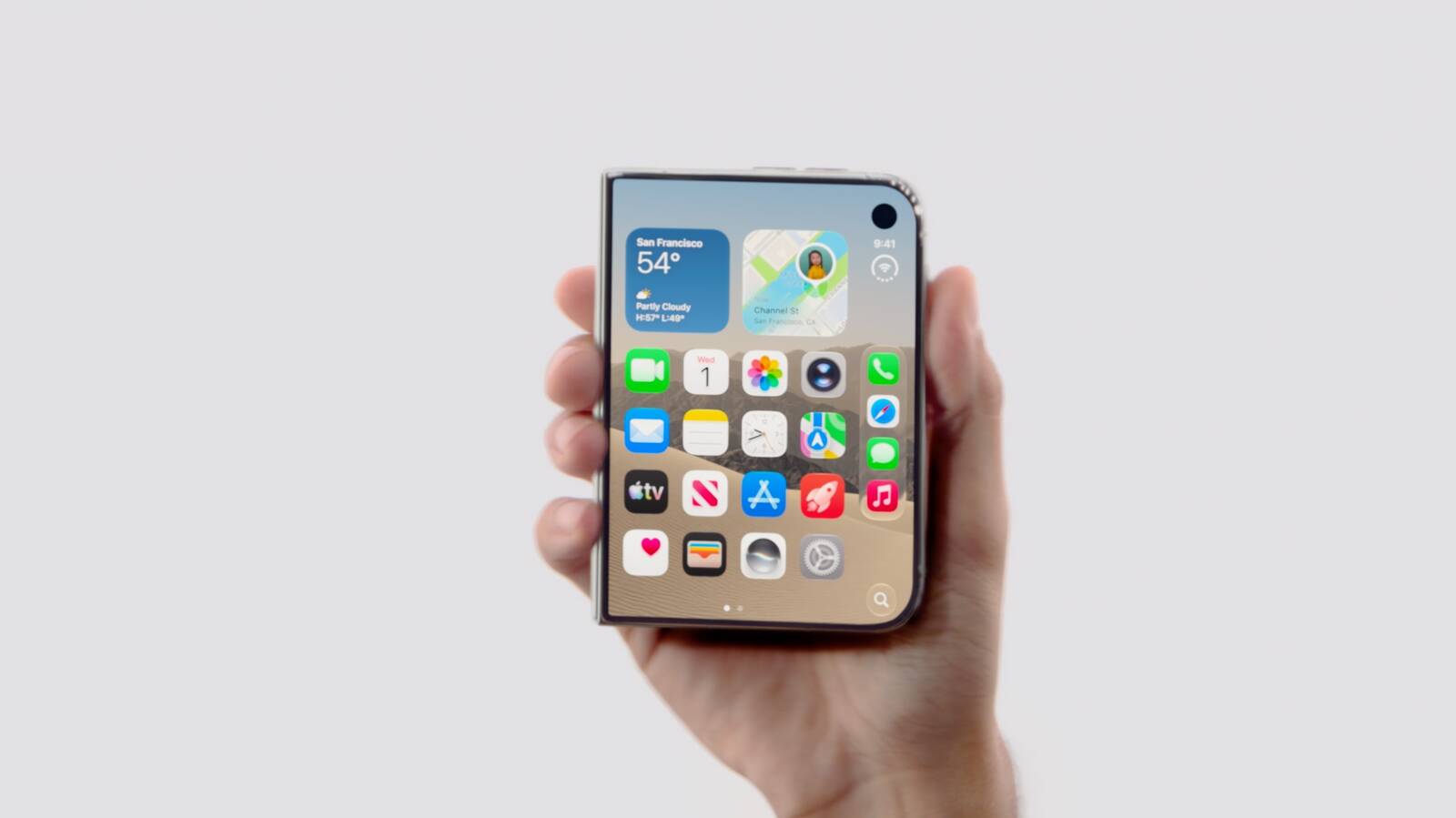
> Users can now prove the authenticity of a photo taken on iPhone 18 Pro models with Apple Reference Image, powered by the new sensor in the Main camera that can sign every pixel it sees. When a photo is taken in the new Reference mode, the camera captures signed sensor data that Private Cloud Compute develops into an unalterable reference image.5 Reference images can be viewed in the Photos app alongside the main image, like a digital negative, to visually compare the two assets and determine if any edits were made. APIs are available in iOS, iPadOS, and macOS 27 for third-party apps to enable viewing of these reference images.
reply